lifetime health and fitness build muscles fast
Several things are involved when it comes to lifetime health and fitness eating habits. Maximum fat loss or weight loss can never be achieved once you cannot create the best diet there is to compliment your workout routines and supplement intakes. Health nutrition is the basics of getting the right fats for the body and not getting any excess of it – keeping your body in balance.

Here are the basic strategies on how to get lean, and maximize fat loss and weight loss results to your body with the premise that you exercise regularly. Here is the grab of these effective eating strategies for fat loss:

Create a meal plan. Of course, the first step of the week. Create a meal plan of what you need to eat for a week. Know the foods that you need to eat that are fitting to nourish your body from your daily activities. Always allot a cheat day if you want to eat unhealthy foods and to stop your cravings. Then buy the exact foods that you have planned to eat for a week; in this way, no food is in excess in the fridge and you would not be tempted to sneak in and get foods whenever you are craving.

Eat 5 to 6 times a day. Divide you heavy meals into 5 to 6 small meals a day. In this manner, your body is constantly nourished by the food and it gives more room for metabolism in order to break down your food.

Eat more proteins. If you want to get lean muscles fast, achieve weight loss but at the same time be more muscular, then eat more protein that carbs. The ideal gram of protein intake for a day is your weight in pounds multiply by 1.25 and that is the amount of protein you need to eat (weight in pounds x 1.25 = grams of daily protein intake)

lifetime health and fitness build muscles fastEat more cruciferous vegetables. Nothing beats the greens especially the leafy ones like broccolis, kales, cabbages, horse radishes, and etc. Proteins make your body acidic and these vegetables counter that effect. More so, green leafy vegetables cleanse and detoxify the liver since they are rich in micronutrients and fiber.

Don’t shy away from starches. Starches are good to eat especially after workouts. However, you must be very cautious if you eat them in balance or not. If you want to get lean and increase muscle size then eat some starches after your workout. Healthy starches can come from beans, quinoa, sweet potatoes, brown rice, etc.

Eat dense foods but low in calories. Eat foods that are rich in nutrients but are low in calories. Spinach, lettuce, cabbage, egg whites, and broccolis are good examples but just make sure that you are not making a meringue out of the egg whites or you are not adding sour creams and other unhealthy additives to these foods.

Drink water. Know the lifetime health weight loss benefits of water. Water is essential to keep your muscles, metabolism, and nutrients in balance. You must drink ounces of water daily using this formula: your weight in pounds x 0.6 = ounces of water that you need daily.

Eat the right fats. Do not totally abhor fats, you still need them to lubricate your joints, keep you warm, and give you energy. However, eat the right kinds and amount of fats. Read food labels, stay away from trans fats, consume less saturated fats, and take in more monounsaturated fats and polyunsaturated fats. Flaxseed oils, olive oils, fish oils, and nuts are good sources of healthy fats.

Lastly, have fun and do not be too strict on your eating habits. Never go loco with what you eat and calculate how much you eat all the time. Just create a lifetime health and fitness commitment that you are going to follow these guidelines a step at a time if you are struggling until you make them your habits.

Read More
Posted by Benjamin Robert Johnson on Wednesday, June 23, 2010

reduce cellulite
As a public lifetime health educator, one of the countries I have visited is the Philippines. Among any others, this country brags of its proficiency in English communication. Gladly, most English speaking countries like my country, the US, take this opportunity to outsource some of their call centers here.

Primarily, cheap labor is what prompted foreign businesses to outsource here. As what I have observed, many Filipinos set aside their childhood dreams to work in call centers. How sad it is to note. Call centers often lure young professionals because of a relatively high starting salary of 15,000 pesos (a lot higher than average laborers) and not to mention allowances, signing bonuses, good work performance, and other incentives.

In reality however, companies are exploiting the cheap labor here in the Philippines. A Filipino call center agent earns on average around $4000 dollars a year lower than Thailand with $4,900, Malaysia with $5,200, and Singapore with $16,900.

Not to mention the lifetime health problems attributed in working at a call center. These include:
  • Stress problems. Call center agents are always under pressure since they are constantly monitored. Low job discretions with high performance monitoring contribute to stress and rapid burnout. Months or years under stress can cause heart problems, nervous breakdown, erectile dysfunction, fatigue, and many others.
  • It causes boredom and lack of interest. Call center agents work the phones for the entire duration of their shifts unlike other jobs where people get a chance to go out and get fresh air, read newspapers, surf the internet, and take some snacks. Some call centers may be loose on these things but not loose enough compared to other industries. Boredom and lack of interest can cause a death knoll of the brain – it reduces brain power. For long, it contributes to memory loss even at a younger age.
  • Very potent source of anxiety. Since everything is monitored, low score translates to corrective memos which can cost an agent his job; this constant monitoring cause anxiety to agents. On the losing part, penalized agents do not even have enough opportunity to appeal. In some companies, even tenured agents issued with corrective action memos get terminated.
  • Females suffer from Urinary Tract Infections (UTI). According to a survey by the Ecumenical Institute for Labor Education and Research, a 10-minute break period is allowed for personal use like going to the restroom. This becomes difficult to workers more specifically to females since a cold working environment encourages frequent urination.
  • More exposure to unhealthy foods and lifestyle. Bars, restaurants, and convenient stores accommodate night shift workers. We all know that foods serve in these places are highly processed or packed. Thus, this leads to unhealthy food choices and unhealthy manners like smoking or severe drinking of coffee. These bad practices can further lead to lung cancers, high blood pressure, depression, cellulite problems, and even malnutrition.
  • Body clock is disrupted. Disrupting one’s biological clock more often can cause manic depression and heart problems.
reduce cellulite
  • Less socialization leads to emotional problems. Since the time followed is of the client’s, there is less time for the family and friends. Weekends and holidays are rarely off and there is prevalent overtime or extended time. Dr. Prandya Kulkarni, who writes for United Press International Asia, adds that young BPO workers, who receive high salaries, do not have the maturity and emotional capability to handle their wealth. This sudden wealth syndrome has led to such high-risk behaviors as loose sexual practices, drug addictions, and alcohol abuse.
  • Exhaustive workload creates lifetime health vulnerabilities. According to studies, exhaustive workloads can lead to various diseases like hypertension, cardiovascular illnesses, tuberculosis, sexually transmitted diseases, and high risks of cancer. Also, more medical needs are created to cure these heart diseases, or even cut off body fats, and even reduce cellulite build up for agents. Medical expenses lead to more financial problems.
  • Exposure to health hazards. An independent study shows that working in call centers shows high incidences of eyestrains symptoms, musculoskeletal symptoms, voice disorders, and hearing problems.
  • Causes intellectual drain and immaturity. A Foreign independent shows that agents usually have a monotonous lifestyle, it only involves work, eat, sleep, and a little socialization. This common lifestyle often leads to communal apathy or in Filipino terms they call it “walang pakialam.” Since call center agents are engrossed with their work, they do not have time to respond to social needs and concerns which can directly benefit them as a community and as a country. If this mentality is imbibe, then a worse social cancer of apathy will surely pull the Philippines down as it is happening today.
Myriads of lifetime health problems are faced with call center agents. Lack of education, social awareness, and public response made this things happen. It gives individual health problems and a social cancer if these problems are not addressed.

Read More
Posted by Benjamin Robert Johnson on Monday, June 14, 2010

lifetime health and fitness
Many individuals who want to achieve lifetime health and fitness satisfaction fall into the biggest mistake of imitating the Pro body builders. Some jump into heavy and strenuous exercises right away without knowing the nature of their bodies. Doing exercise routines without good knowledge of how to build muscles would not make these people achieve what they want.

Any average individual needs a different approach in muscle building. One must prevent physical and mental overtraining by doing exercise routines too much and too soon. Here is some effective tips on how to build muscles and achieve lifetime health and fitness satisfaction:
  1. Build your muscularity. More muscles means more strength. Strength training is one of the best exercises in building those muscles. One of the best strength training exercises is weight lifting since it allows an individual to start from light and add weight when one progresses. Body-weight exercises are good too.
  2.  Choose free weights. Free weights are safer that machines since they replicate natural body motions rather than unnatural movement patterns caused by machines. Free weights are efficient since it forces one to control and balance the weights to build more muscles.
  3. Perform multiple exercises. Isolation exercises are good once a person has built the base strength and muscle mass. However, if one is starting, doing multiple or compound exercises are better since more muscles are involved in the process. 
  4. Train the lower parts of the body. Legs are also the important parts of the body. In working with legs, squats are the best exercise. One can totally look different when he can free weight squat 1.5 times his body weight. Free weight squat means squatting with hips coming lower than the knees. Leg training should never be neglected when it comes to achieving lifetime health and fitness satisfaction.
  5. Do full body workouts. It is good to reserve a day to three days to go into intense cardio training. This improves ones cardiovascular endurance, blood circulation, and keeps body parts well functioning and help reduce stomach fats. One must not eat before intense cardio training so that the body will be forced to tap its stored fats and energy. A 45-minute to 1-hour cardio is already good enough.
The most crucial in any workout is the attitude. One must persevere, commit, and be determined to reach his goals. One must know that lifetime health and fitness satisfaction will never be achieved in a day, but it is a lifetime commitment to stay healthy.

Read More
Posted by Benjamin Robert Johnson on Monday, June 7, 2010

Have your lifetime health condition failed by missing to recall important information – memory loss? Have you ever experienced taking in a lot of information but could not retrieve them whenever you need it? Many individuals of all races and of different ages have health individual experiences on memory loss due to the worsening implementation of lifetime health care programs, circumstantial involvements of unexpected events, information overload, stressful working environments, and heavy tasks.

The truth is many individuals who experienced memory loss are the ones who need to recall information the most. Work careers or professional practices where sharp memory and lifetime health is pivotal involve management, business, law, and other decision-making positions. Experiencing memory loss at this kind of careers is downright detrimental to growth.

Thus, where do you start? The problem of memory loss can be solved by making a healthy habit of your brain – begin with an essential one – reading. The health benefits of reading are associated in developing high cognitive skills and memory retention. Good reading habits lead to improvement of sharp memory skills.

Here is a basic guide on how you can read effectively and develop better memory:
Take interest. Interest hastens learning from what you have read. Health benefits of reading involve stimulating your mind to take in information effectively.
  • Select significant points. You do not have to remember all the details in what you are reading. Lesser information to recall saves you time; thus, only focus to the significant information. There is a higher propensity of memory loss when there is too much information to recall.
  • Pay attention. Lesser attention to critical information results to memory loss and worsening of lifetime health condition. When you want to save information to your long-term memory, give your best attention to the information you want to retain.
  • Take time to understand. No matter what you read – a book, a manual, or a magazine – they are futile when you do not learn the substance. Learning the substance means understanding the information.
  • Intention to remember. You can remember information well when you have the intention of doing so.
  • Take confidence. Confidence plays a critical part in overcoming self-defeating thoughts. Whenever these self-defeating thoughts come across your daily routing, at least, you know what to do.
  • Organize information. Get the main ideas of what you have read or classify them to importance. This is the best way to indulge critically to the information you ingest. In contrary, memory loss can occur if the information you have gathered are all cluttered in your brain.
  • Practice these techniques. Practice gives you better memory skills and greater health benefits.
Remember, poor memory is caused by giving your brain lesser chances to develop. Reading hones your brain and boosts its memory when you know the right techniques. Whether you are at work, a business man, or just busy about anything, always take time to read and form good habits. In this way, your brain will never age again and enjoy better lifetime health condition.

Read More
Posted by Benjamin Robert Johnson on Saturday, May 8, 2010
0 comments
categories: | edit post

Are you into body building? These are the recommended list of fat-burning foods that feeds your muscles and gives you the most valuable resources that your body needs for a lifetime health and fitness commitment. Although, healthy food choices goes into an infinite number but these are staple foods that provides you the foundation of your lifetime health and fitness program. VARIETY is important for good nutrition but these power fat-burning foods that you cannot go wrong with and these are the varieties that you can get back from time to time.


  • Oatmeal. What makes oatmeal so great that virtually even bodybuilders and fitness models eat them in a daily basis? Oatmeal may starchy carbohydrates but it has a nice balance of good fats, carbs, and proteins. A half cup of oatmeal contains 3 grams fat, 27 grams carbs and 5 grams of protein; it has a low glycemic index which is perfect to for getting lean. Choose all-natural oats that you can combine with natural applesauce or cinnamon. NEVER choose flavored or sweetened oatmeal packets. 
  • Yams and sweet potatoes. They are flavorful, all-natural, contain low calories, and are packed with anti-oxidants like beta-carotene. Yams have low glycemic index which are also good for diabetics. Any health concern related to eating yams and sweet potatoes are associated on what you combine with them. Thus, never eat them with calorie dense additives like creams and butter.
  • Potatoes. Potatoes have earned an undesirable reputation in weight loss and lifetime health fitness programs; they contain high glycemic index which means that they can rapidly increase your blood sugar level. However, they can be good sources of carbs when you are in a muscle building program. There is nothing wrong with potatoes, but there is something wrong with how many times we eat them and how we eat them. Never combine with calorie dense creams, butter, or bacon bits.
  • Brown Rice. Brown rice is good for body building, it gives you the calories you need. Always eat them boiled or steamed rather than making them into fried rice.
  • 100% whole wheat and whole grain products. Always choose 100% whole grains. Stay away with anything made from white flour.
  • Green vegetables like broccoli, asparagus, and lettuce. Fibrous carbs are your number one choice for fat burning carbohydrates. Green vegetables, also known as fibrous carbs, hardly contain any calories (they have a low calorie density). It’s virtually impossible to overeat green vegetables since they contain lifetime health benefits. Eat them liberally and eat more of them late in the day. A diet of green vegetables combined with lean proteins is one of the best methods of getting lean as quickly as possible.
  • Fresh fruit. Fresh fruits are the best choices when you go to a fitness program. However, it is not advisable to go into an all fruits diet. Always balance your meals with all the necessary food groups. Fresh fruits contain a lot of nutrients that keeps your body healthy.
  • Skim milk and non-fat dairy products. Before taking them in, you must know if they are “fat free”, skim or 1% low fat milk. Never drink or eat dairy products containing higher doses of fats.
  • Chicken meats and turkey. Chicken and turkey are probably the number one most popular protein sources among bodybuilders and fat loss seekers. Remove the skin and get the light meat found in the breasts. The thighs are higher in fat and calories. Naturally, your poultry should be broiled, grilled, or roasted and not fried. Also, we’re talking about the real bird here, not the sliced lunch meat you find at deli’s or pre-packed in supermarkets. Lunch meats are processed proteins. Some nutritionists call them “fabricated foods” because they are made from a mix and poured into a mold before being cooked and wrapped. While these are acceptable occasionally, don’t make them a staple in your regular daily diet. Lunch meats are loaded with sodium, preservatives, binders, fillers and other nasty chemicals that you don’t want floating around in your body!
  • Egg whites. Egg whites contain 0% fats. Stay away from egg yolks. If you like, you can eat 1 egg yolk for every 6 egg whites but do them rarely.
  • Fish and Shellfish. What most people don’t eat enough of is fish and seafood. By using different types of fish and shellfish as protein sources, you can add an incredible amount of variety as well as getting those valuable good fats for health benefits. Here is just a partial list of fish to consider: salmon, tuna, haddock, flounder, mackerel, trout, snapper, sea bass, swordfish, mahi mahi, perch, orange roughy, sole, Halibut, herring cod and catfish.
  • Lean Red Meat. Bodybuilders are quite famous for loving their red meat. Many bodybuilders believe that red meat helps muscle growth, and there may be much truth in that statement. Red meat is high in protein, B-12, iron and creatine. The problem with most cuts of red meat is the high fat content. However, not all cuts of red meat are the same. It’s a mistake to label the entire red meat category as a no-no because of high fat content. If you carefully choose the leanest cuts possible and keep your portion sizes small, red meat can be a great addition to a fat burning program. For example, a 6 oz serving of lean, trimmed top round steak has only 9 grams of fat, while a 6 oz of untrimmed porterhouse has 37 grams of fat (and the 18 oz porterhouse you’re often served in a steak house has over 100 grams of fat!)
All these foods helped you pumped up the muscles that you want to gain. It makes you beefy and gives you better muscularity, makes you a head turner and gives you more confidence. Plus, it improves your lifetime health condition.

Read More
Posted by Benjamin Robert Johnson on Tuesday, April 6, 2010

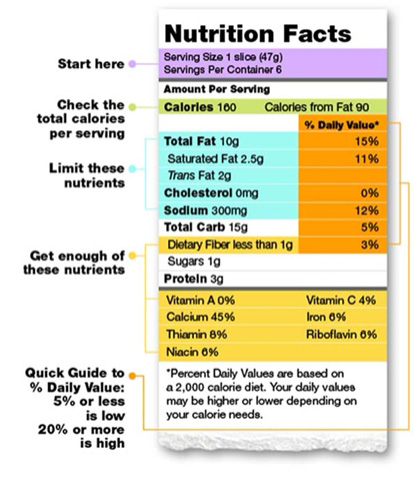
lifetime health food label
Going to a store and thinking of a healthy meal? Lifetime health conditions are not born overnight but are done through routines and best attitudes. Naturally, your choices of foods are part of choosing how to live healthy and youthfully in life. The supermarkets are the best avenues to know how you work in the kitchen. What you buy is what you prepare and what you prepare is what you are going to eat.

Basically, have you made it a habit to check the label? How do you choose a product amongst the others of its kind? One of the best health tips for a better life begins at your choice of food. Here is how you will know what is on the label:


  • Serving size. Serving sizes are standardized to easily compare similar foods; they provide information like cups, number of grams per serving, pieces, and etc. The serving size provides you basic information on how to count your calories.
  • Limit these nutrients: Trans Fat, Saturated Fat, Sodium, and Cholesterol. Some food labels color this yellow; meaning, you must limit the intake of these nutrients. Many chronic health individual conditions like heart disease, high blood pressures, and some cancers are caused by the excessive intake of these nutrients. 
  • Get enough of: dietary fiber, Vitamin A, Vitamin C, Calcium, and Iron. These are the nutrients you need for a balance meal. Lack of these nutrients makes the food a junk; this is the reason why there are “junk foods.” For good reasons, even less nutritious foods are fortified with vitamins. Be careful with this and do not be fooled, weigh first if the benefits outweigh the disadvantages in choosing the right foods you eat. Ideally, you must choose the best number of health benefits compared to its disadvantages.  
  • Know the percent Daily Value (DV). Most uses the 2,000 calorie diet while little uses the 2,500 calorie diet. Whichever it is, know your average daily calorie needs so that you will know the DV. For example, if the percent Daily Value says that you get 30% of Calcium in one serving, then you need 70% - 90% more of it in a day depending on your daily activities. 
  • Know what is organic. Foods labeled with “100% organic” contain organically grown ingredients except with added water and salt. “Organic” can be used if 95% of the ingredients are organic and “made with organic ingredients” if 70% of the ingredients are organic.
  • Be keen with the “low”, “reduced”, “-free” terms. Low calorie foods contain less than 40 calories per serving. Low-fat foods contain less than 3 grams of fat per serving. Low-sodium foods contain less than 140 grams of sodium per serving. Foods with “reduced” on the label (like “reduced sugar” or “reduced calorie”) must contain at least 25 percent fewer calories than the regular version of the same product. Calorie-free foods have less than 5 calories per serving, and fat-free foods can have up to 0.5 grams of fat per serving. The same holds for sugar: Foods can have 0.5 grams of sugar and still be labeled sugar-free.
  • The difference between “made with” and “100 percent” labels. When you buy whole-grain products and fruit or vegetable juices, be sure to look for the label “100%” (and double-check the ingredient list). If a bread label, for example, states, “made with whole grains,” it may not contain many. Likewise, many fruit juice beverages contain as little as 10 percent actual juice — and often lots of sugar.
Finally, are all these health claims on food labels for real? On a good stance, the FDA allows certain lifetime health claims to be made on food labels. In some cases, food labels may state that certain ingredients may affect normal structure or function of the body, such as “fiber maintains bowel regularity,” but may not state that an ingredient prevents or treats disease. On the other hand, dietary supplement labels must state that the product “is not intended to diagnose, treat, cure, or prevent any disease” because their claims are not evaluated by the FDA. A few qualified health claims are allowed on labels, such as “Scientific evidence suggests but does not prove that eating 1.5 ounces per day of most nuts as part of a diet low in saturated fat and cholesterol may reduce the risk of heart disease.” In these cases, the labels must adhere to strict wording that is determined by the FDA for accurate lifetime health tips and  information on consumers.

Read More
Posted by Benjamin Robert Johnson on Friday, March 26, 2010

lifetime health muscle building
Intensity is what builds muscle mass to achieve better lifetime health condition. The greater the intensity of your workout, the better results you can get for a well defined and bulked up muscles. Muscles are also one of the effective elements for fat loss, weight loss or even weight gain. For some who have grown obese or overweight, building muscles takes fats for energy and thus it gives you a lean look. For those who are underweight, muscle building provides bigger and leaner body making them look bigger rather than limpy.

However, a lot of individuals find muscle building, exercises, or even workouts difficult. Lifting weights? What is in it for you? Tiresome. Indeed, people need to psych up to get the best results. Without the right frame of mind, none can get the lifetime health benefits they want to achieve.

Fortunately, here is some effective techniques on how to boost your mental and physical intensity for better health benefits and results:
  • Begin with the end in mind. Before any workout, clearly envision your entire routine – know each set and repetition you need to do. Focus your mind on the muscles that you want to develop and how you will execute each exercise to build up those muscles.
  • Stick to your goal. Establish the weight that you want to lift, the repetitions that you want to do, and the phasing of every set. This gives you focus enables you to execute successful moves.
  • How big do you want it to be? Establish your physical goals of how big you want your muscles to be. How big do you want your arms, shoulders, thighs, butt, and etc? Always keep in mind the balance.
  • Persevere and focus. Keep your focus all throughout the exercise to get the maximum benefits. Always keep your mindset all throughout the entire workout. Your health concern here it is to maintain your strength, stamina, and endurance.
  • Keep a record. After every workout, keep a record of your reflections. Is your mind in focus or is it wondering somewhere else during the exercise? Were you distracted? Did you get the most reps in the exercise? What is your health concern?
Now that you know your performance, it is easier for you to improve. Make yourself accountable of your own record. Your record will show your improvement. If possible, take 10 minutes or so before your workout to reflect on the past workouts you have done and how you can improve them. Greater lifetime health benefits are expected for those who know how to build their muscles well.

Read More
Posted by Benjamin Robert Johnson on Sunday, March 7, 2010

Followers